The Eye That Winked Without Permission
In This Essay A Twitch Called Hemifacial Spasm The Surgery Behind It: Microvascular Decompression Recovery After Microvascular Decompression We spend…
Fine Lines — Dr. Jaydev Panchawagh's Neurosurgery Blog
“Many neurologists consider it among the most severe pains the human nervous system can generate.
Some have called it the suicide disease — not as metaphor,
but because untreated cases carry a real risk of pushing patients toward self-harm.”
— Dr Jaydev Panchawagh · Trigeminal Neuralgia Centre, Pune
W
hile operating on a patient with the extreme pain of trigeminal neuralgia, I turned the beam of the neuromicroscope deep into the lower part of the brain — onto the very structure called the pons. Under that cold, brilliant light, the trigeminal nerve came into view. The fifth cranial nerve. The great sensory highway of the face.
Her trigeminal nerve was not the smooth, pearl-white cord it was supposed to be. It had been crushed flat. A blood vessel — large, unyielding, pulsing — had buried itself into the nerve’s most vulnerable segment: the root entry zone, where the protective myelin sheath is thinnest. The vessel had not merely rested against the nerve. Over the years, it had bored into it, and the nerve had frayed apart in response — its fibres separating like threads pulled from a torn cloth.
Seventy-five to eighty times a minute, the artery pulsed. With each beat, a blow of a hammer on the nerve. For years. Day after day, month after month, year after year. The nerve looked like a crushed ribbon.
“This degree of damage need not have happened. If surgery had been performed earlier, this patient would not have suffered so long.”
The delay, in case after case, has the same cause: the patient simply did not know. The family did not know. Often enough, even the treating doctors did not know. Trigeminal neuralgia has spent too long entangled in a web of misunderstanding.
Nivedita Bhatnagar (name changed) — an architect from Delhi. Deeply capable. Perceptive. And extraordinarily eloquent about her own pain. When she first came to our centre, she could only gesture. Even the small act of opening her mouth to form words triggered a bolt of electricity through the right side of her face. The simple daily architecture of language had become a minefield.
“It truly began in January 2004. A sudden, sharp pain would start in the upper right gum and radiate into the right cheek. The pain was like an electric shock. Instant. Without warning. Brushing my teeth, if the brush touched the right gum — or while chewing on that side — these were enough to trigger it. An unbearable, shattering jolt.”
She went first to a dentist, as almost every patient with this condition does. The upper right molar received a root canal. The pain not only persisted — it grew. A neurologist recognised a nerve problem and prescribed carbamazepine.
“The medicine helped while it worked. But it made me drowsy. I began forgetting things. As the dose increased, I started losing my balance when I walked. I thought: if one nerve in one small location is the problem, why am I numbing every nerve in my body? That is not treatment. That is suppression.”
She was exactly right. The drugs do not address the cause. They address the signal. And as the underlying compression worsens, the signal grows louder, the dose must rise, and the side effects multiply. The person diminishes.
It is not the pain alone that destroys a life — it is the anticipation of pain. Between attacks, the person lives in a state of suspended dread. Will it happen now? This question follows every meal, every conversation, every walk in the wind. The face becomes a danger zone. People stop speaking in full sentences, stop eating certain foods, stop going outside in cold weather, stop socialising.
Sustained pain remaps the brain. It alters threat perception, attention, sleep, and mood. A person with long-standing trigeminal neuralgia has not only a damaged nerve — they have a nervous system that has been reorganised by years of crisis.
The trigeminal nerve is the fifth and largest of the twelve cranial nerves, with three branches covering the forehead and eye, the cheek and upper jaw, and the lower jaw and chin. In trigeminal neuralgia, something goes wrong at precisely the point where the nerve enters the pons. An adjacent blood vessel — most often the superior cerebellar artery — subjects the nerve to constant mechanical pressure.
As we age, arteries lengthen and grow more tortuous. A vessel that once ran parallel to the nerve begins to loop toward it. It makes contact. It presses. It pulses — seventy, eighty, a hundred times a minute. Over years, this pulsatile trauma erodes the myelin sheath. When the myelin is gone, bare axons are exposed. The trigeminal nerve begins to misfire in response to the lightest stimuli: a brushstroke, a breath of cool air, a sip of water.
“Some have called it the suicide disease — not as metaphor, but because untreated cases carry a real risk of pushing patients toward self-harm. The pain is that severe and that relentless.”
For most of the last century, treatments have been aimed at the nerve itself — not the offending vessel. Alcohol injections. Radiofrequency ablation. Glycerol injections. Stereotactic radiosurgery. But this logic misses the point entirely. The nerve is not malfunctioning because it is inherently defective. It is malfunctioning because it is being compressed.
Ablating the nerve addresses the symptom while leaving the cause in place. As the vessel continues to press, the disease continues to advance. Each repetition carries risks — including permanent facial numbness, or the development of anesthesia dolorosa, in which the face is numb but burning simultaneously.
In the 1960s, an American neurosurgeon named Peter Jannetta changed the course of this disease permanently. His premise was elegant in its simplicity: if the problem is a blood vessel compressing a nerve, the solution is to separate them.
A small opening is made in the skull behind the ear. The neuromicroscope floods the dark, crowded space of the posterior fossa with light. The surgical team navigates until the trigeminal root and its offending vessel come into view. Then, with instruments no wider than a matchstick, the vessel is carefully lifted away from the nerve. A small pad of Teflon felt is placed between them. The nerve, freed from pressure, is left entirely intact.
Not reduced pain. Absent pain. Patients who have been unable to speak, eat, or feel wind on their face for years awaken from surgery able to do all of these things.
“After surgery, the pain was gone. Completely gone. The fear was gone. The medications were stopped. I had forgotten what it was like to simply eat a meal, or speak freely, or feel wind on my face.”
“And I was sad. Not for myself — I was free of it. I was sad because I had not found this sooner. Seven years. Seven years of suffering that did not have to happen.”
Seven years. For want of information. Trigeminal neuralgia affects roughly one in ten thousand people — which means, in a country of over a billion, tens of thousands are living with it at any given moment. What is missing is not the knowledge. The knowledge exists. What is missing is the bridge between the knowledge and the patient.
The general practitioner who recognises the lightning-bolt description and refers promptly. The neurologist who knows that MVD exists and spares the nerve. The family member who searches and finds the right centre. Each of these links in the chain saves years of suffering.
I first wrote about this on Gudi Padwa — the Marathi New Year, a day of beginnings and renewed resolve. The gudi is a decorated staff erected each year as a banner of victory, a symbol of rising above adversity. Peter Jannetta raised such a banner in the operating rooms of Pittsburgh in the 1960s.
If someone you know lives with lightning pain in one side of the face — pain triggered by the lightest touch, by food, by cold air, by the simple act of speaking — know this: there is a cause. The cause can be found. And in most cases, it can be corrected. The face need not remain a burning inferno.
The author is a neurosurgeon based in Pune, with a specialised focus on Microvascular Decompression for trigeminal neuralgia and hemifacial spasm since 2004.
Dr Jaydev Panchawagh · Trigeminal Neuralgia Centre · Pune, India
#TrigeminalNeuralgia · #MVD · #FacePain · #Neurosurgery · #PeterJannetta · #DrJaydevPanchawagh
Names and identifying details have been changed to protect patient privacy. Shared with the patient’s consent.

A neurosurgeon by training, a writer by compulsion — and a student of the human condition by necessity. These essays explore what science, surgery, literature, and life have in common: the fragile, extraordinary act of paying attention.
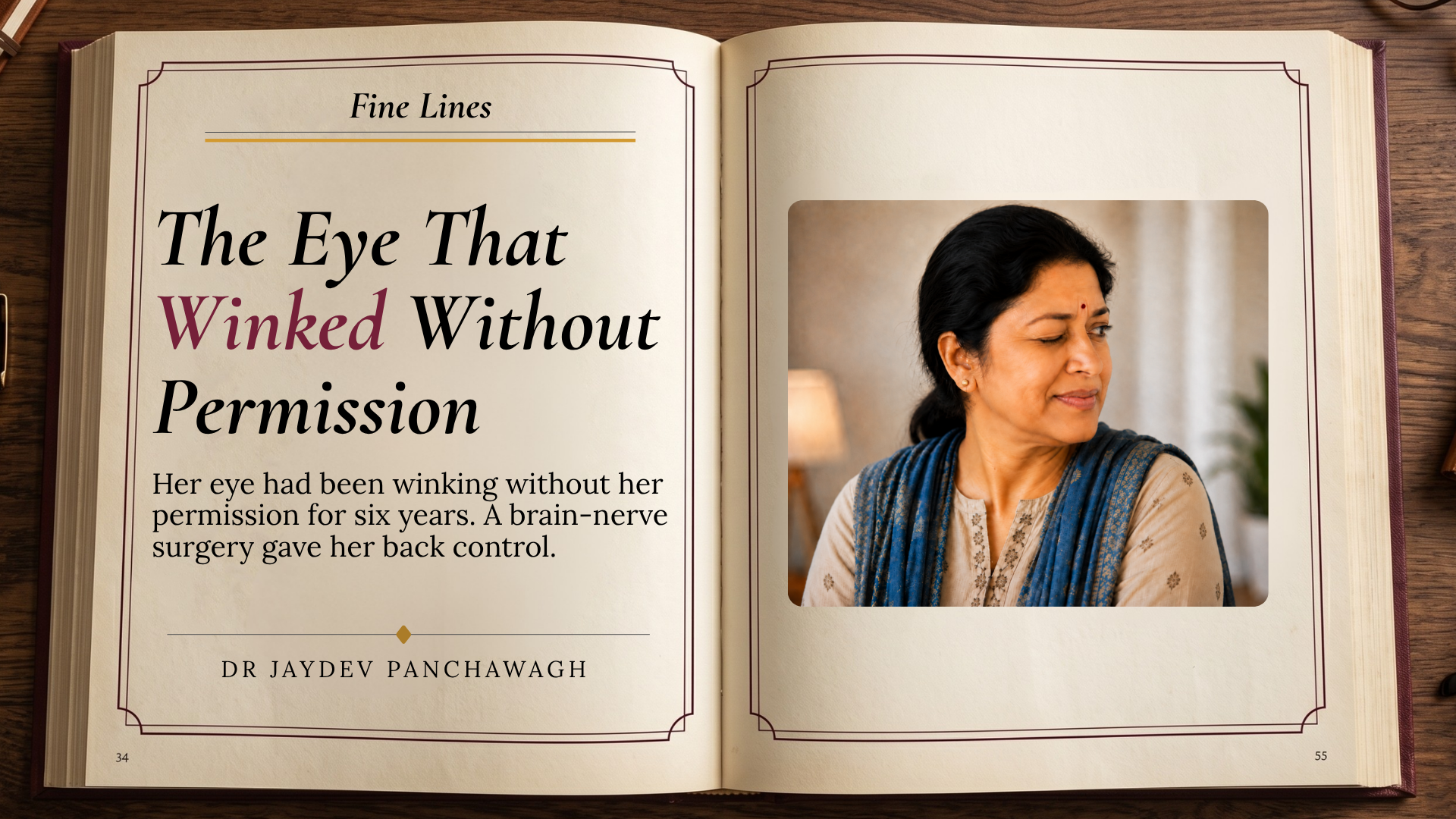
In This Essay A Twitch Called Hemifacial Spasm The Surgery Behind It: Microvascular Decompression Recovery After Microvascular Decompression We spend…
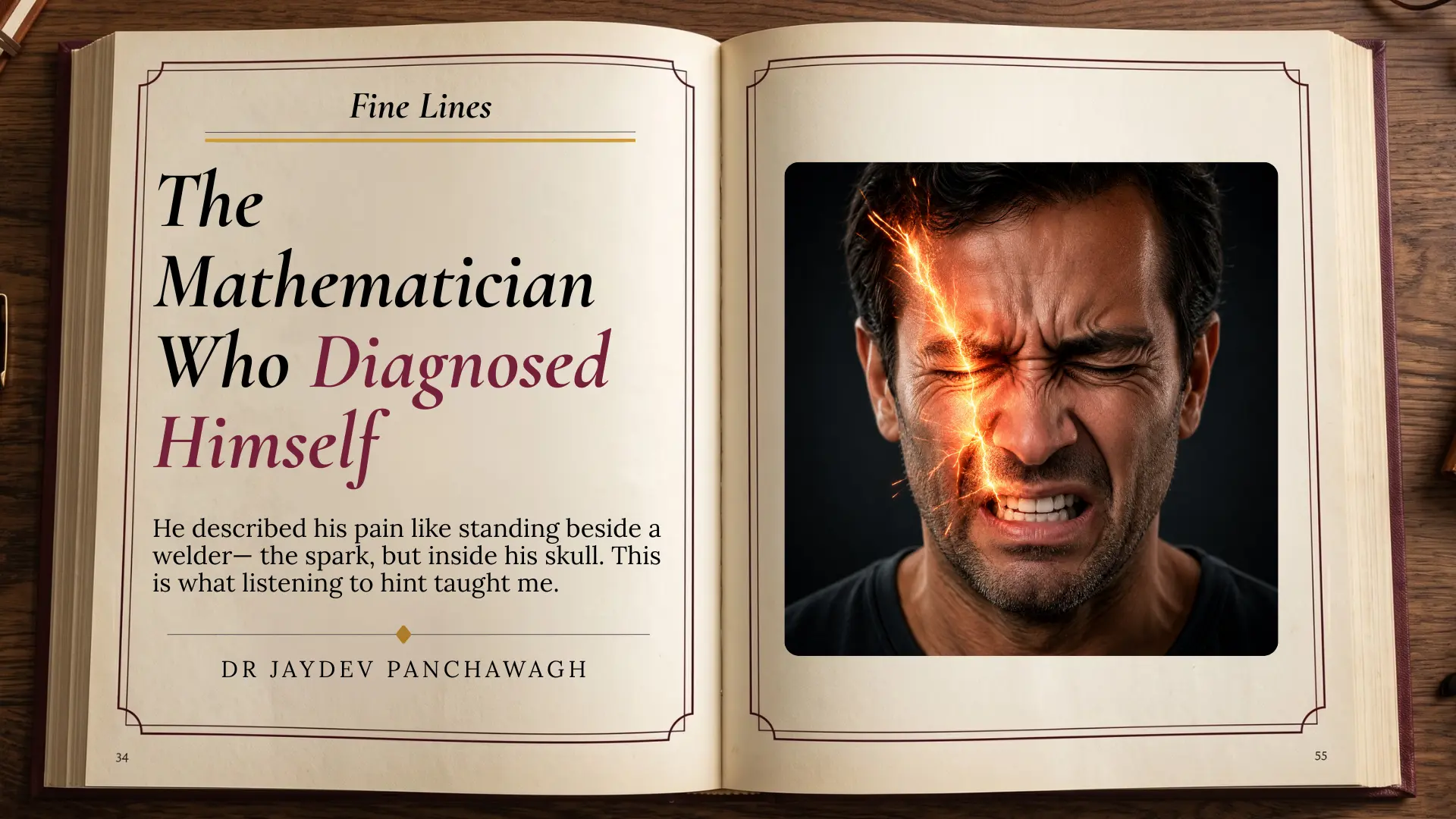
In this piece Diagnosing Trigeminal Neuralgia: A Patient Who Noticed What Doctors Missed Living With Trigeminal Neuralgia: Four Years Before…
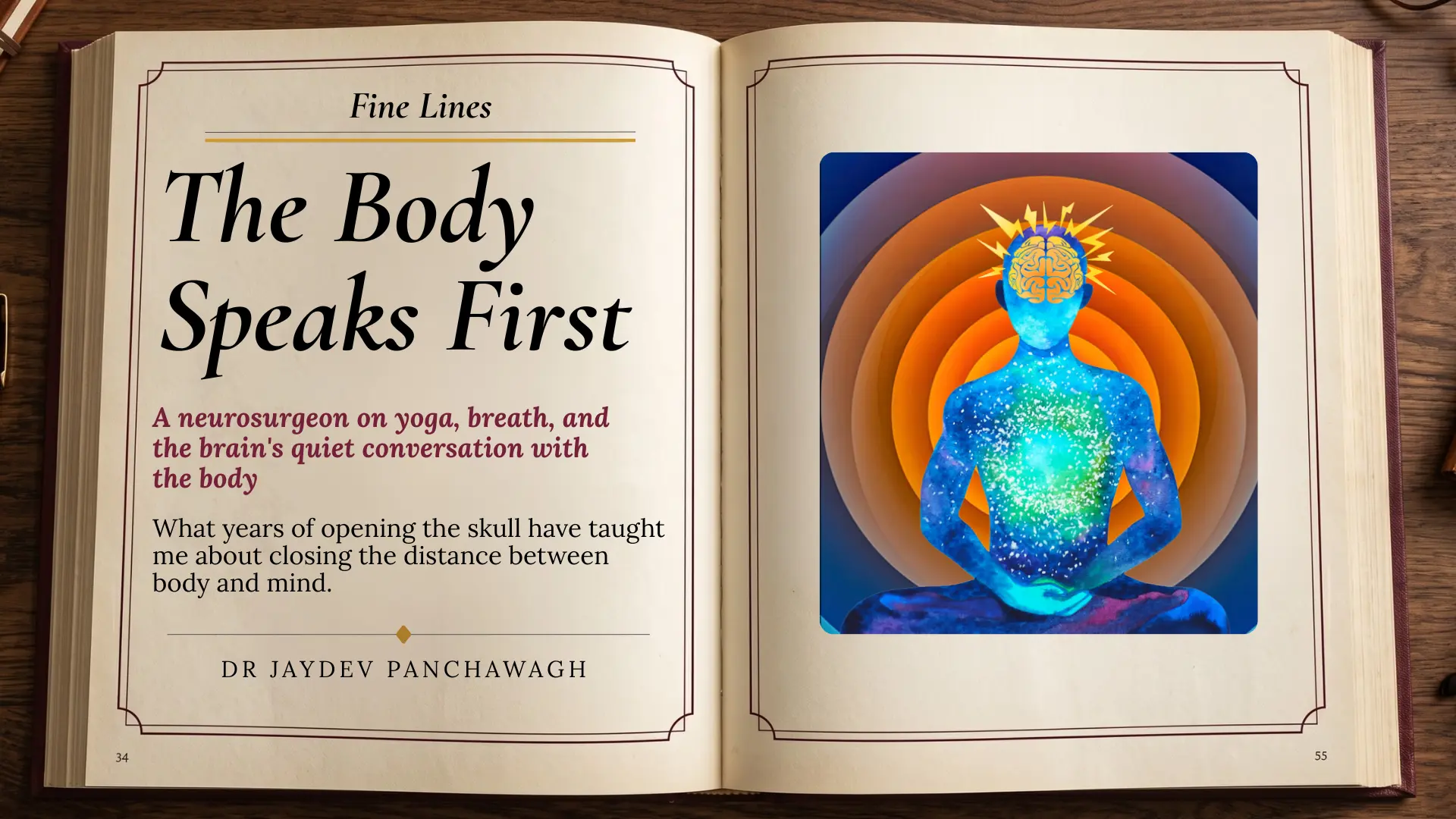
I have spent much of my working life looking directly at the brain. Under the microscope it does not look…
brainspine66@gmail.com
+91 9011333841, +91 7720948948
102, Bhagyatara Society, Erandwane, Pune, India
The information on this website is for educational purposes only and does not constitute medical advice. Consult a qualified neurosurgeon for guidance specific to your condition. Read full disclaimer →
Copyright @2026 | Dr. Jaydev Panchawagh | Praavi Medicare
Website security powered by MilesWeb
